Q&A with Industrial Design Manager Young Kim
We recently had the opportunity to sit down with Industrial Design Manager for the Microsoft Hardware Group, Young Kim, to reflect on how Microsoft Hardware has evolved over its 30 year history, look forward to what the future of Hardware will bring, and get some advice from Young to young designers out there today.
What is your title at Microsoft and when did you start with the company?
I am the Industrial Design Manager for Microsoft Hardware. I originally started as an intern with Microsoft Research 7.5 years ago. After that, I joined the Microsoft Hardware Group where I started designing keyboards, mice and communication devices and most recently, the Arc Touch Mouse.
What are the steps in developing a product? How do you go from conception to prototype?
This process is about a 12-month long journey. We first determine what problem we are trying to solve for – what are the needs, how can we address them in a way that’s meaningful to consumer’s lives and complement what they already have. We aren’t sitting in a design studio making assumptions about customer needs – we spend time with our customers, observe them using PCs, interact with them, speak with them about what they feel they aren’t getting with their computer peripherals. Once we have that understanding, we come up with a solution. There are a lot of iterations and prototypes ranging from foam core to a machined working prototype. This process helps us make mistakes early on so our final product is flawless and executed perfectly. Once we feel good about the engineering and design solutions we have made, we take the prototype to our manufacturing partners. This is the most fascinating part for me – working with the rest of the team of nearly 40 individuals across a range of functions that are all working together to bring this to life.
What is the Arc Touch Mouse and what were your influences in regards to its design?
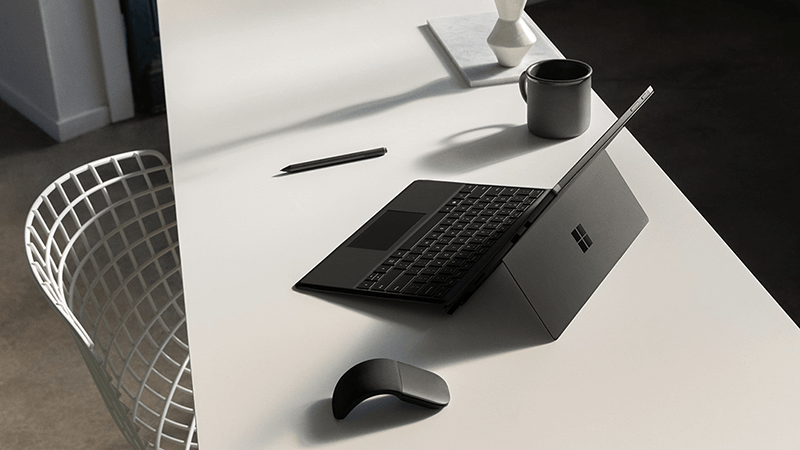
Arc Touch Mouse is designed for quick use, mobility and easy storage. It curves for comfort and flattens to pack for people who still want the comfort and productivity of a mouse while on the go. When you’re done you can flatten Arc Touch Mouse to turn it off, and slip it into your pocket or bag as easily as a cell phone. The design principles we had in mind when designing Arc Touch Mouse were very much grounded in customer needs. The customers wanted to have a mouse with them, but it was an inconvenience to have another object in their bag. We wanted to create a mouse that was easy to carry, but also comfortable when you wanted to use it as a mouse. The design aspects that we spent a lot of time thinking over were pride in craftsmanship, authenticity and attention to detail. These principles are not only relevant in software design, but hardware design too.
What do you think differentiates Microsoft Hardware from other companies?
We have the ability to impact such a broad range of customers and offer products that work seamlessly across all the different products and services Microsoft offers. That is something not a lot of brands can do – having that range and scope as designers is something we take very seriously within the Microsoft Hardware Design Group. There are only 12 of us in the whole world that have the opportunity to put a Microsoft logo on a product and we don’t take that for granted. We want to make it count on every product we design.
This is the 30 year anniversary for the Microsoft Hardware Group. How have products evolved over the years and what does the future hold?
For the past 30 years our organization has been focused on developing input devices for Windows PCs and we need to continue to focus on that as this will always be the goal of the Microsoft Hardware group. People ask me if I think the mouse will be in our future and my answer is always yes. When you need to select that one pixel on your screen, there is no other tool better than a tangible object in your hand to do so. We need to remain focused on developing input devices that define that best way to interact with PCs for the future and pave the road for peripherals as interaction models shift and evolve into different platforms and operating systems.
How has Microsoft’s reputation changed over the last few years within the design community?
What’s amazing is that Microsoft as a brand has a tremendous amount of respect in design. It’s not often that we get to interact with designers across the country let alone from overseas. At a recent event hosted by the Industrial Designers Society of America (IDSA) for their International Design Excellence Award Ceremony (IDEA), we had a chance to not only interact with designers from all around the world in different industries, but we were also recognized by this community as the best in category for Industrial Design. We don’t strive to win awards. That’s not our end goal… But to be recognized by this community is something we don’t take for granted. It’s very gratifying to be recognized for design as a Microsoft brand. In fact, Windows Phone Design Team was also recognized as People’s Choice Award and Best in Category. It really came to life for me when we were being recognized by multiple organizations… We received the Good Design Award from The Chicago Athenaeum/Europe and also received the prestigious Red Dot Design Award. And then the Smithsonian, Cooper-Hewitt, National Design Museum added the Arc Touch Mouse as part of their permanent collection! It’s very cool to see all design groups across the company being recognized for their hard work. I think it’s a result of us hiring the right people and fostering creativity while demanding perfection from everyone in the team.
What advice do you have for young designers?
Overall, young talent should learn just enough to get motivated and don’t try to understand the entire process, it can be daunting for someone with a creative mind — ignorance is bliss in this instance and is the key to get going.
What are some of your other hobbies outside of work?
I enjoy house renovation and have been renovating my home for the past three years. It’s hard for me to zoom out and do things quickly, but I enjoy it – it’s just like designing a product but on bigger scale. I enjoy traveling and have recently been to Hong Kong and Tokyo. I also enjoy cooking – my wife is a pastry chef and I’m trying to learn the savory, culinary part of the meal and my wife takes care of the desserts.
- Hardware Team